General-The Core Problem

One Doctor Cannot Hold the Whole Picture. That is Not a Failure of the Doctor.

Traditional healthcare models often fail chronic patients by isolating medical specialties, creating blind spots that miss interconnected lifestyle or underlying factors.

Read Full Insights
Mind & Stress

Your Anxiety Was Treated. Your Thyroid Was Not. Both Were Making You Worse.

Chronic mental health and sleep struggles are frequently treated solely as psychological stress, causing doctors to overlook underlying physical causes like thyroid issues or nutrient deficiencies.

Read Full Insights
Gut & Digestion

Six Months of Medicines. The Bloating Never Left.

Conventional acidity treatments in India often fail to provide lasting relief because standard medical appointments lack the time to address the root causes of chronic gut problems, such as stress, diet, and lifestyle.

Read Full Insights
Body Pain & Musculoskeletal

Nine Months. Two Specialists. The Answer Was Exercise.

A nine-month delay in treating mechanical, postural pain with medication instead of exercise highlights a systemic failure to initially assess patients through a comprehensive lens.

Read Full Insights
Hormonal Health

PCOD. Weight That Will Not Move. Mood That Nobody Could Explain. Three Separate Problems. One Connected Root.

Isolated, fragmented medical advice for PCOD leaves many women in India navigating conflicting information and unaddressed hormonal issues.

Read Full Insights
Fatigue & Low Energy

You Were Not Lazy. You Were Undertreated.

Chronic fatigue in India is frequently dismissed as a minor lifestyle issue because standard blood panels often show biomarker values within the "normal" clinical reference range.

Read Full Insights
Chronic Disease Management

Diabetes for Eight Years. Nobody Talked About Food Until Year Six.

Standard diabetes care in India relies heavily on escalating medication, as crowded clinic schedules prevent physicians from providing intensive dietary intervention.

Read Full Insights
Immunity & Prevention

Falling Sick Every Month Is Not Bad Luck. It Is a Signal Your Body Has Been Sending for a Long Time.

Recurring infections and prolonged recovery periods indicate an immune system operating below optimal capacity rather than a true clinical deficiency.

Read Full Insights
Fertility & Reproductive Health

PCOS, Trying to Conceive, and Three Different Plans From Three Different Doctors. You Needed One Coordinated Path.

Fertility treatment in India is a deeply stressful process where women face heavy social pressure and must personally navigate conflicting medical advice from uncoordinated specialists.

Read Full Insights

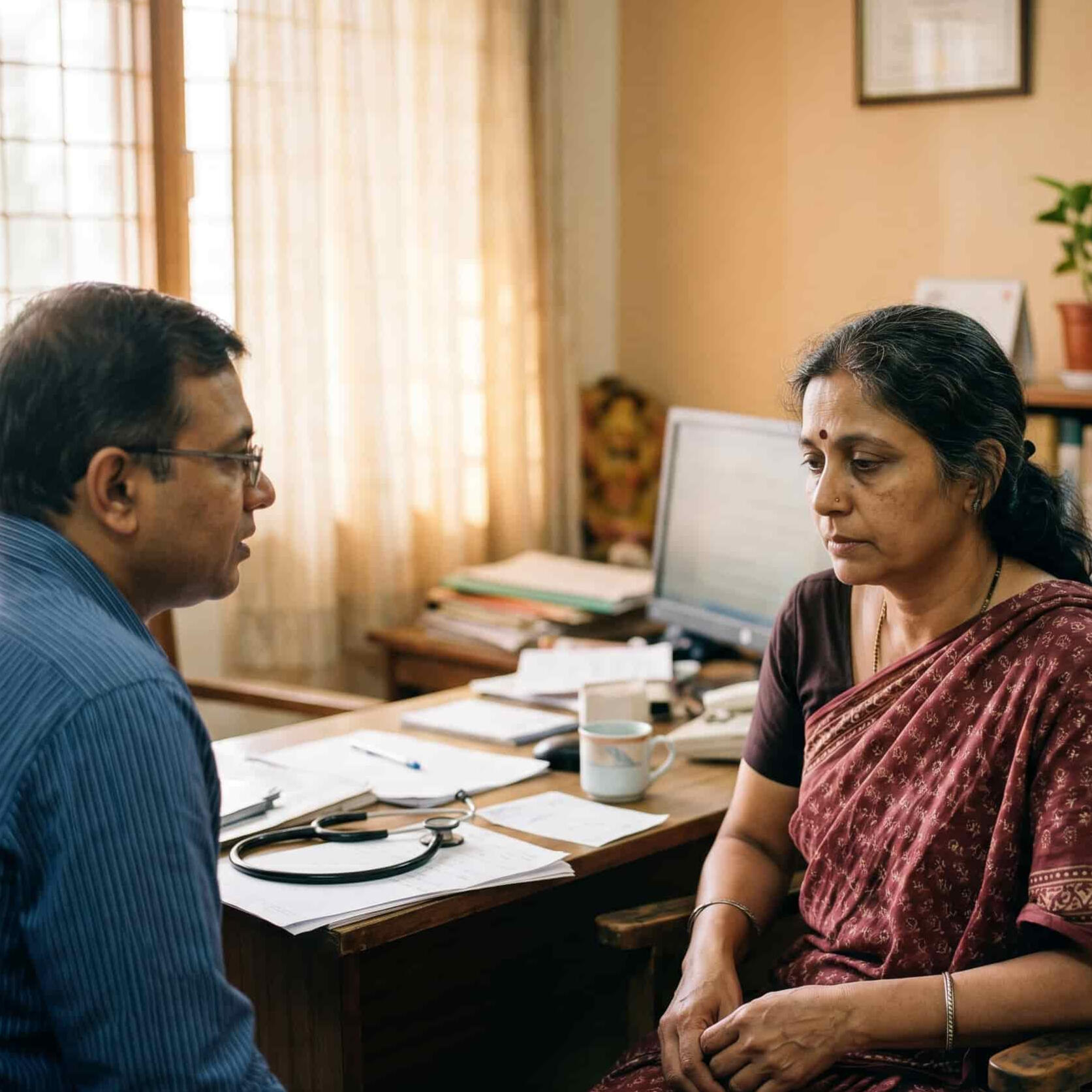
One Doctor Cannot Hold the Whole Picture. That is Not a Failure of the Doctor.

A worried Indian woman in a saree sitting in a clinic consulting a doctor, illustrating the patient journey of reconciling conflicting medical advice from independent specialists.

When You Finally Find the Right Expert — and They Are Still Only Half the Answer

At some point, the pain or the fatigue or the recurring symptoms become impossible to manage alone, and you do what any sensible person does: you find the best doctor available.In India, that usually means asking around. A relative recommends someone. A trusted colleague mentions a specialist with impressive credentials. You hear that a DM or MD at a well-known hospital has handled cases like yours before. You book the appointment, wait your turn, describe everything from the beginning, and hope that this time something shifts.And often, something does. The doctor is genuinely capable. The prescription is considered. There is improvement.But months later, there is also a new symptom that did not exist before — or an old one that never fully resolved — and because this doctor knows you now and you trust them, the logical thing is to go back to the same person. And they do their best with what they know. Which is, by definition, their domain.

The Gap Nobody Talks About

Every speciality in medicine is built around depth. A cardiologist is trained to see what happens inside the cardiovascular system with extraordinary precision. A neurologist understands the nervous system at a level most of us cannot comprehend. That depth is the entire point. It is what makes specialists valuable.But depth creates a blind spot on either side of it.A patient whose back pain is significantly worsened by a sedentary lifestyle and vitamin D deficiency may receive excellent orthopaedic advice — and still not improve, because no one in that consultation room was looking at what she was eating or how much sunlight she was getting. A patient with recurring anxiety who also has a thyroid imbalance may spend months in therapy — useful months — while the hormonal driver continues running in the background untouched.No single expert, however gifted, is trained to look at all of this simultaneously. And the current healthcare structure gives them no mechanism to do so even if they wanted to.

What Actually Needs to Happen

Recovery from most chronic health conditions is not a single-track problem. It involves a clinical diagnosis — yes. But it also involves how you eat, how you move, how you sleep, how you manage stress, and often how you are thinking about the illness itself.When those pieces are addressed by different people working independently — even excellent people — the patient carries the burden of connecting them. They repeat their history at every new appointment. They try to reconcile conflicting advice on their own. They often give up midway through because the coordination overhead becomes its own form of exhaustion.What works is when those people are working together, around the same patient, from the beginning.

What JeevanKey Does

JeevanKey builds a small, coordinated team of two to four independent health experts — assembled specifically around your health profile — and brings them into a single WhatsApp group with you.A doctor is always the first point of contact, assessing your physical condition and ensuring nothing clinical is missed. The rest of the team — which may include a dietitian, a physiotherapist, a counsellor, or a wellness specialist depending on your profile — works alongside that clinical foundation, not independently of it.You do not manage the coordination. You do not repeat your history to each person separately. You do not choose between conflicting recommendations. The team works from a shared picture of where you are and where you need to go.This is not a new philosophy. It is simply how good healthcare has always worked when the structure allowed it to.

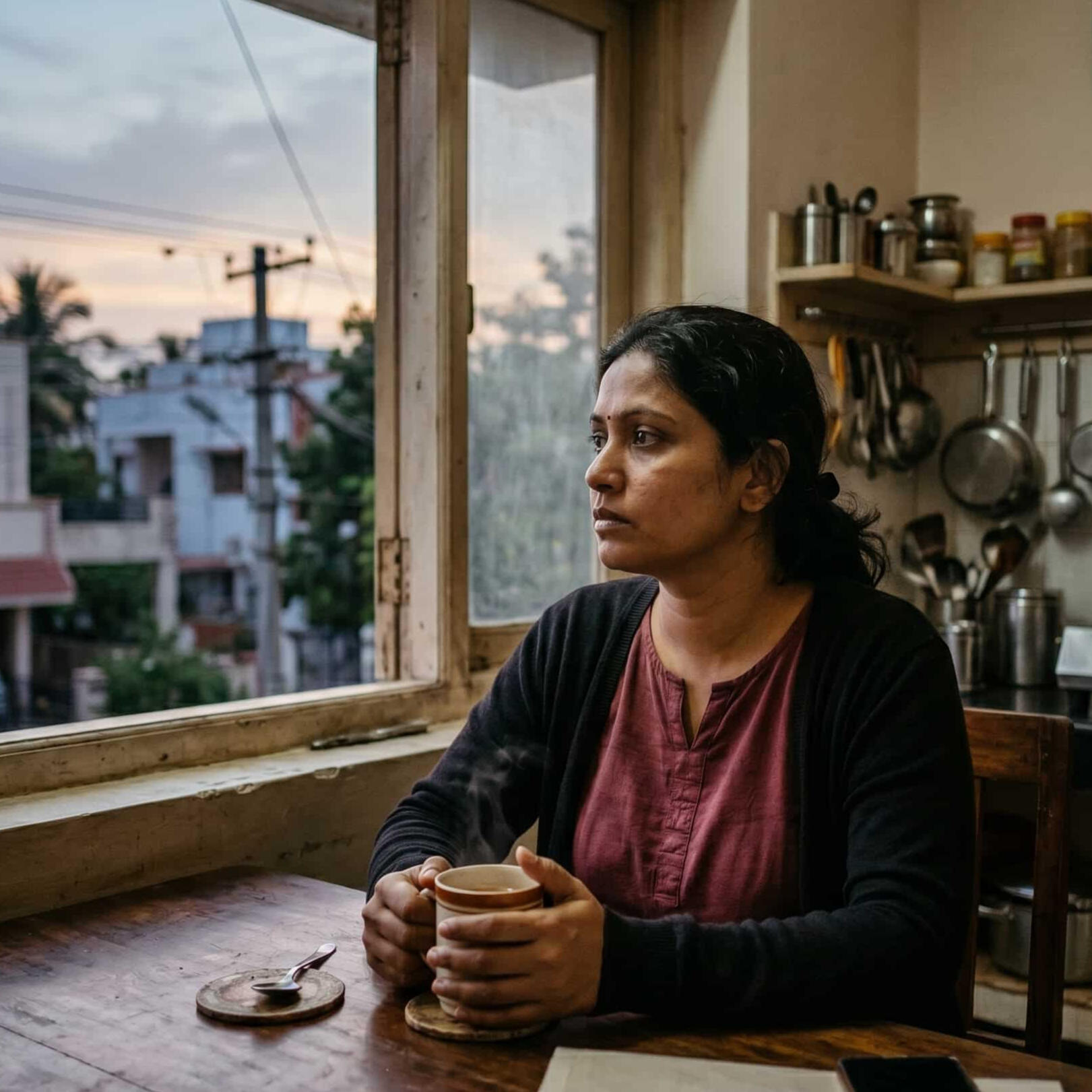
Your Anxiety Was Treated. Your Thyroid Was Not. Both Were Making You Worse.

A pensive Indian woman sits at a kitchen table holding a hot cup of tea and looking out the window, capturing the emotional weight and mental health toll of fertility challenges in India for JeevanKey.

The conventional diagnoses frequently miss underlying physiological root causes.

The sleeplessness started around the time the work pressure peaked. So the connection made sense. Stress leads to poor sleep leads to exhaustion leads to low mood — this is the sequence every health article describes, and it fit.So you treated it as a stress problem. Perhaps you spoke to a doctor who agreed and suggested some medication or a referral. Perhaps you managed it yourself with lifestyle changes. For a while, it helped. Then it stopped helping, or helped less than it should have, and you were back in the same place.

What nobody checked during this entire period — or checked and noted but did not treat as primary — was whether something physiological was running the loop from underneath. Thyroid dysfunction, for instance, presents almost identically to stress and anxiety disorders. Vitamin B12 or D3 deficiency does the same. Iron deficiency in women is one of the most commonly missed contributors to fatigue and low mood.None of these are exotic diagnoses. They are visible on a standard blood panel. But when the presenting story is stress, the investigation often stops at stress.

The Problem With Treating the Visible Layer

Mental health in India is still, in many households, something discussed quietly if at all. When a family member finally seeks help — from a general physician, or a psychiatrist, or a counsellor — the act of getting there involves considerable effort and sometimes courage. The appointment addresses the presenting complaint. What often does not happen is a broader review of what else might be contributing.Meanwhile, the physical body continues doing what it was doing before the appointment. Poor nutrition, disrupted sleep rhythms, a sedentary lifestyle — each of these has a documented, measurable impact on mental health. None of them are resolved by a prescription or a therapy session. They require a different kind of attention from a different kind of expertise.This is not a criticism of psychiatrists or counsellors. It is simply outside the scope of what a mental health consultation is designed to do.

Recovery Is a Multi-Track Problem

When the mental health condition has physical drivers, treating only the mental health condition gives partial results. When it is worsened by lifestyle factors, treating only the mental health condition gives partial results. Full recovery — the kind where you actually feel like yourself again — requires all of those tracks to be addressed at the same time, by people who know what each other is doing.JeevanKey builds a team around your specific mind-and-body picture. Every team begins with a doctor who assesses the physical side — checking for thyroid, nutritional deficiencies, hormonal contributors. The treatment lead, typically a counsellor or psychotherapist, works on the mental and emotional recovery. Where relevant, a dietitian or wellness coach works on the physical lifestyle factors that directly affect your mood, sleep, and energy.They all work together, from a shared picture of you. You do not manage the coordination. You recover.

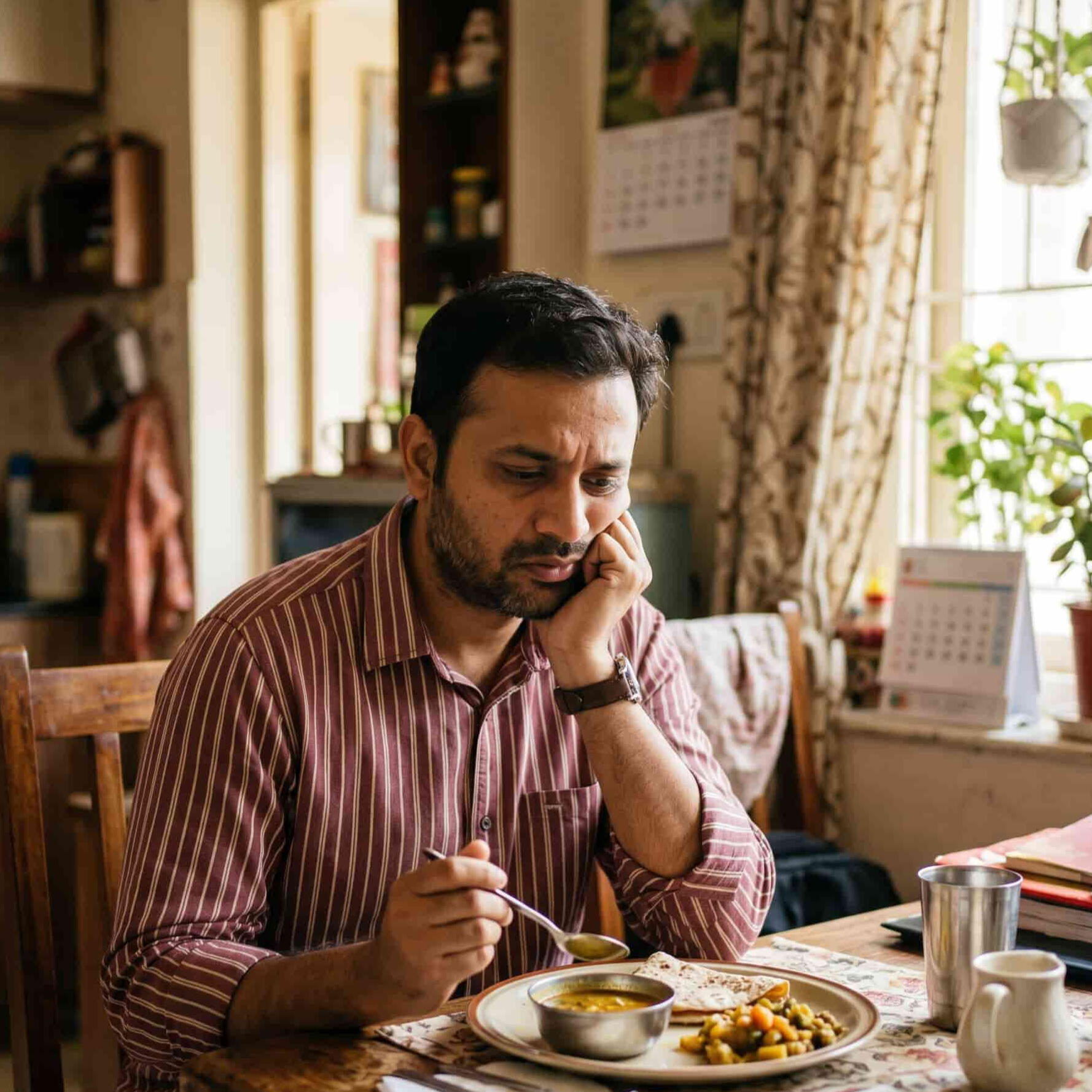
Six Months of Medicines. The Bloating Never Left.

A stressed and worried Indian man sitting alone at a dining table looking at his food, highlighting the bloating pressure experienced by desk job professionals.

Why Your Household Remedy and Local Medical Shop Pills are Failing

Acidity is the most commonly self-diagnosed condition in India. The pharmacy is full of antacids. Every household has a preferred brand. Most people manage their gut discomfort for months — sometimes years — before seeking formal help.When they do seek help, the appointment usually results in a prescription: a PPI for the acid, perhaps a probiotic, a note to avoid spicy food and oil. There is some improvement. Then a week after the prescription ends, it is back. Bloating after every meal. Irregular bowel movements. A heaviness in the stomach that no amount of cumin water seems to touch.

The gastroenterologist or general physician is treating the gut. That is exactly what they are trained to do. What they are not trained to do — and what a single appointment cannot accommodate — is a full reconstruction of what you are eating, when you are eating it, how your stress levels are affecting your gut motility, and whether the way you are breathing and moving is playing a role in your digestive recovery.

The Gut Is Downstream of Everything

Chronic gut problems rarely exist in isolation. Stress directly affects gut motility — this is not a metaphor, it is physiology. The enteric nervous system in the gut contains more neurons than the spinal cord, and it responds to cortisol, sleep deprivation, and anxiety as acutely as it responds to food.Eating habits that seem broadly fine can still be creating gut inflammation if the timing, combinations, or portion patterns are wrong for a particular person. A sedentary lifestyle slows digestion. And certain gut conditions are significantly worsened by foods that are marketed as healthy — raw vegetables, high-fibre foods — for people whose gut lining is already compromised.None of this complexity can be addressed in a fifteen-minute consultation focused on symptom management. It requires time, tracking, and someone whose entire clinical function is the detailed science of food and digestion.

What Coordinated Gut Recovery Looks Like

JeevanKey assembles a team for gut and digestive conditions that starts with a doctor — ruling out infections, inflammatory conditions, and anything clinical that needs medical attention first. The active treatment lead is typically a clinical dietitian whose work is the detailed, patient-specific reconstruction of eating patterns, food sequencing, and gut-healing nutrition.Where stress is a significant factor, a counsellor joins the team. Where movement and breathing are relevant — and for gut conditions they frequently are — a yoga and breathwork specialist is included.Everything happens together, in one WhatsApp group, with a Care Coordinator keeping the team aligned. The bloating does not disappear because of a single prescription change. It resolves when the full picture is being addressed by the right people, simultaneously.

Nine Months. Two Specialists. The Answer Was Exercise.

An Indian woman practicing a seated forward fold yoga stretch on a mat in a bright living room, emphasizing holistic stress relief and physiotherapy exercises.

When Diagnostic Journeys Overlook Mechanical Solutions

The pain started in her calves and hands. She was referred — by a well-meaning relative — to a neurologist. He was highly qualified. He ran investigations and prescribed a treatment course including steroids. She took them, morning and evening, for six months. There was some improvement. Then a new symptom appeared, and it was added to the treatment plan.After six months, still not fully recovered, she saw an MD in general medicine. Another assessment. A different diagnosis. Another few months of medication. And then, at the end of this journey — nine months in, a body carrying the residue of sustained pharmaceutical intervention — an orthopaedic surgeon reviewed her case and told her something she had not heard before: she needed exercise, not more medicine.

The pain had a mechanical and postural basis. Movement was the treatment. It had been, from close to the beginning.

How Does This Happen?

It happens because the first specialist a patient reaches is not always the right first specialist — and because there is no structure in Indian healthcare to gently course-correct that early. A highly credentialed neurologist, seeing a patient with nerve-related symptoms, will investigate through a neurological lens. That is their training, their expertise, and their responsibility. If the picture looks neurological, it will be treated neurologically.What is missing is a step before that first specialist appointment — a step where someone looks at the full picture, understands the body as a connected system, and points the patient toward the right starting point rather than the most impressive available expert.The neurologist was not wrong to treat what they saw. The system was wrong to have no one asking broader questions first.

Body Pain and the Experts Who Should Be Involved

Most chronic body pain — back pain, joint pain, muscle pain from postural or lifestyle causes — has three active dimensions: the clinical assessment (what is structurally wrong, whether inflammation is present, whether anything needs to be ruled out), the physical rehabilitation (movement, strength, postural correction), and the lifestyle dimension (body weight, nutrition, daily activity, stress).A doctor addresses the first. A physiotherapist addresses the second. A dietitian or wellness coach addresses the third. When all three are in the picture from the beginning and working from the same understanding of the patient, recovery follows a more direct path.JeevanKey builds pain recovery teams that include a doctor as the clinical anchor, a physiotherapist as the active recovery lead, and depending on the complexity of the case, additional support for the nutrition and psychological dimensions that chronic pain almost always involves.The nine-month detour your body does not have to take.

PCOD. Weight That Will Not Move. Mood That Nobody Could Explain. Three Separate Problems. One Connected Root.

A focused South Asian woman with PCOD, sitting in an armchair by a window writing in her health journal, tracking medical symptoms and managing independent specialist protocols with JeevanKey.

When Diagnostic Journeys Overlook Mechanical Solutions

The pain started in her calves and hands. She was referred — by a well-meaning relative — to a neurologist. He was highly qualified. He ran investigations and prescribed a treatment course including steroids. She took them, morning and evening, for six months. There was some improvement. Then a new symptom appeared, and it was added to the treatment plan.After six months, still not fully recovered, she saw an MD in general medicine. Another assessment. A different diagnosis. Another few months of medication. And then, at the end of this journey — nine months in, a body carrying the residue of sustained pharmaceutical intervention — an orthopaedic surgeon reviewed her case and told her something she had not heard before: she needed exercise, not more medicine.

The pain had a mechanical and postural basis. Movement was the treatment. It had been, from close to the beginning.

How Does This Happen?

It happens because the first specialist a patient reaches is not always the right first specialist — and because there is no structure in Indian healthcare to gently course-correct that early. A highly credentialed neurologist, seeing a patient with nerve-related symptoms, will investigate through a neurological lens. That is their training, their expertise, and their responsibility. If the picture looks neurological, it will be treated neurologically.What is missing is a step before that first specialist appointment — a step where someone looks at the full picture, understands the body as a connected system, and points the patient toward the right starting point rather than the most impressive available expert.The neurologist was not wrong to treat what they saw. The system was wrong to have no one asking broader questions first.

Body Pain and the Experts Who Should Be Involved

Most chronic body pain — back pain, joint pain, muscle pain from postural or lifestyle causes — has three active dimensions: the clinical assessment (what is structurally wrong, whether inflammation is present, whether anything needs to be ruled out), the physical rehabilitation (movement, strength, postural correction), and the lifestyle dimension (body weight, nutrition, daily activity, stress).A doctor addresses the first. A physiotherapist addresses the second. A dietitian or wellness coach addresses the third. When all three are in the picture from the beginning and working from the same understanding of the patient, recovery follows a more direct path.JeevanKey builds pain recovery teams that include a doctor as the clinical anchor, a physiotherapist as the active recovery lead, and depending on the complexity of the case, additional support for the nutrition and psychological dimensions that chronic pain almost always involves.The nine-month detour your body does not have to take.
You Were Not Lazy. You Were Undertreated.

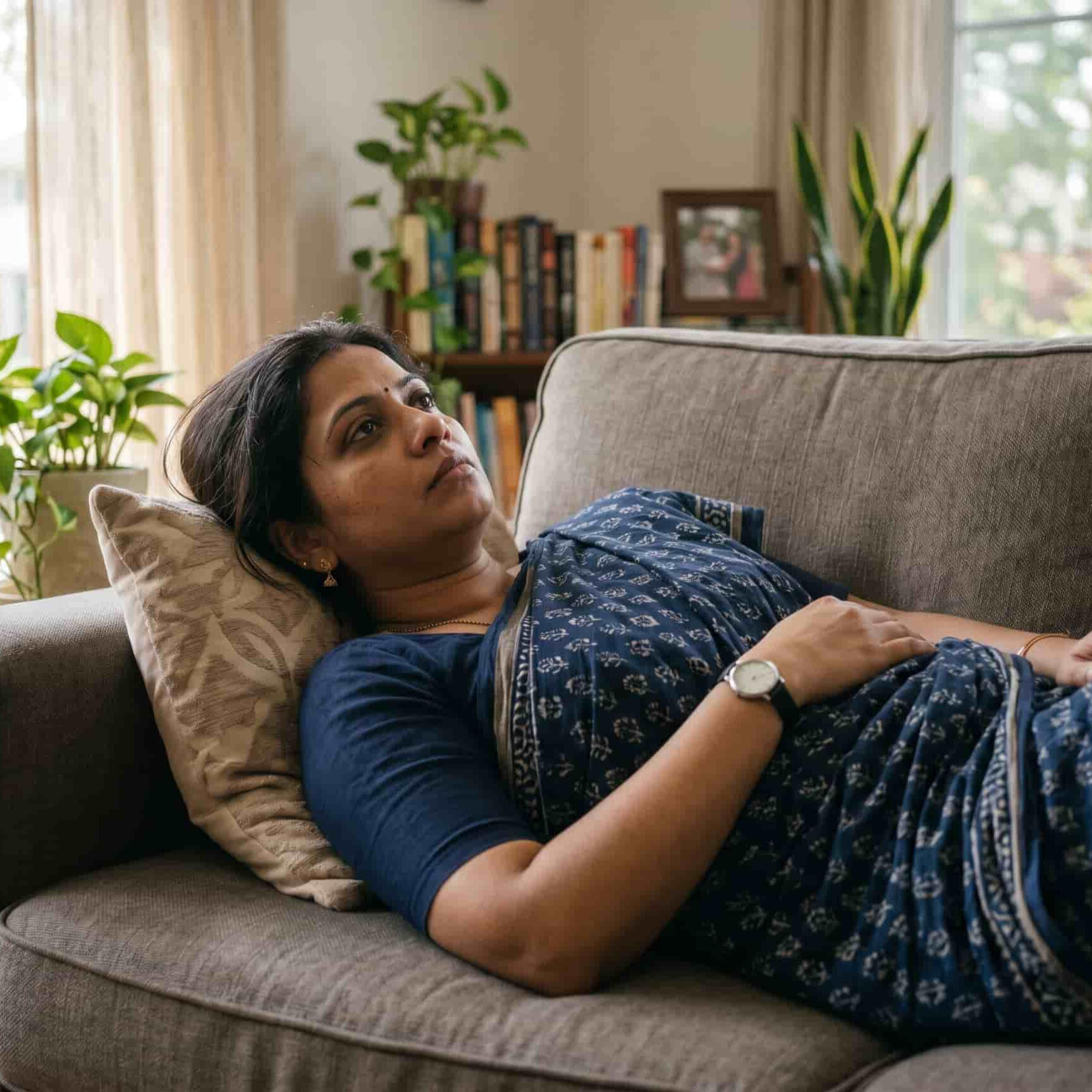
An exhausted Indian woman wearing a blue saree lies on a living room couch looking up at the ceiling, depicting the physical fatigue and emotional burnout of navigating uncoordinated medical care.

The Illusion of 'Normal': Why Standard Blood Panels Miss Chronic Fatigue

Chronic fatigue is one of the most dismissed health complaints in India. Colleagues call it a lifestyle problem. Family members suggest better sleep habits. Doctors — when it is brought up — sometimes order a blood panel, find everything in range, and conclude that nothing is wrong.

But nothing in range and nothing wrong are not the same thing. B12 in the lower normal range is not the same as B12 at optimal. Iron levels that clear the clinical threshold are not the same as iron levels that sustain full energy function. Thyroid values that sit within the reference range can still be significantly impacting energy if they are sitting at the edge of it.Meanwhile, the fatigue continues. The person manages it. They push through. They drink more coffee. They adjust their expectations of themselves downward. And the underlying condition — or conditions, because fatigue is rarely single-cause — continues untreated.

Why Fatigue Is Almost Never a Single-Cause Problem

Sustained, chronic fatigue in otherwise healthy adults typically has multiple contributing factors running in parallel. Nutritional deficiencies are frequent — B12, D3, iron, magnesium. Hormonal factors are common, particularly in women. Sleep architecture problems — not just insufficient hours but poor sleep quality — are significant. Sedentary lifestyle compounds every other factor. And stress, sustained over months, depletes the same physiological reserves that energy depends on.Addressing only one of these produces partial improvement. Addressing all of them together, with the right expertise applied to each, produces recovery.

What Fatigue Recovery Requires

JeevanKey builds energy and fatigue recovery teams that start with a doctor checking the full picture — not just a standard panel but the markers that chronic fatigue actually requires: hormonal levels, nutritional status, inflammatory markers. The dietitian works on the nutritional recovery plan. A wellness or yoga specialist addresses the movement and sleep dimension. Where stress is a primary driver, a counsellor joins the team.For the first time, everything is being addressed at the same time, by people who know what each other is doing.

Diabetes for Eight Years. Nobody Talked About Food Until Year Six.

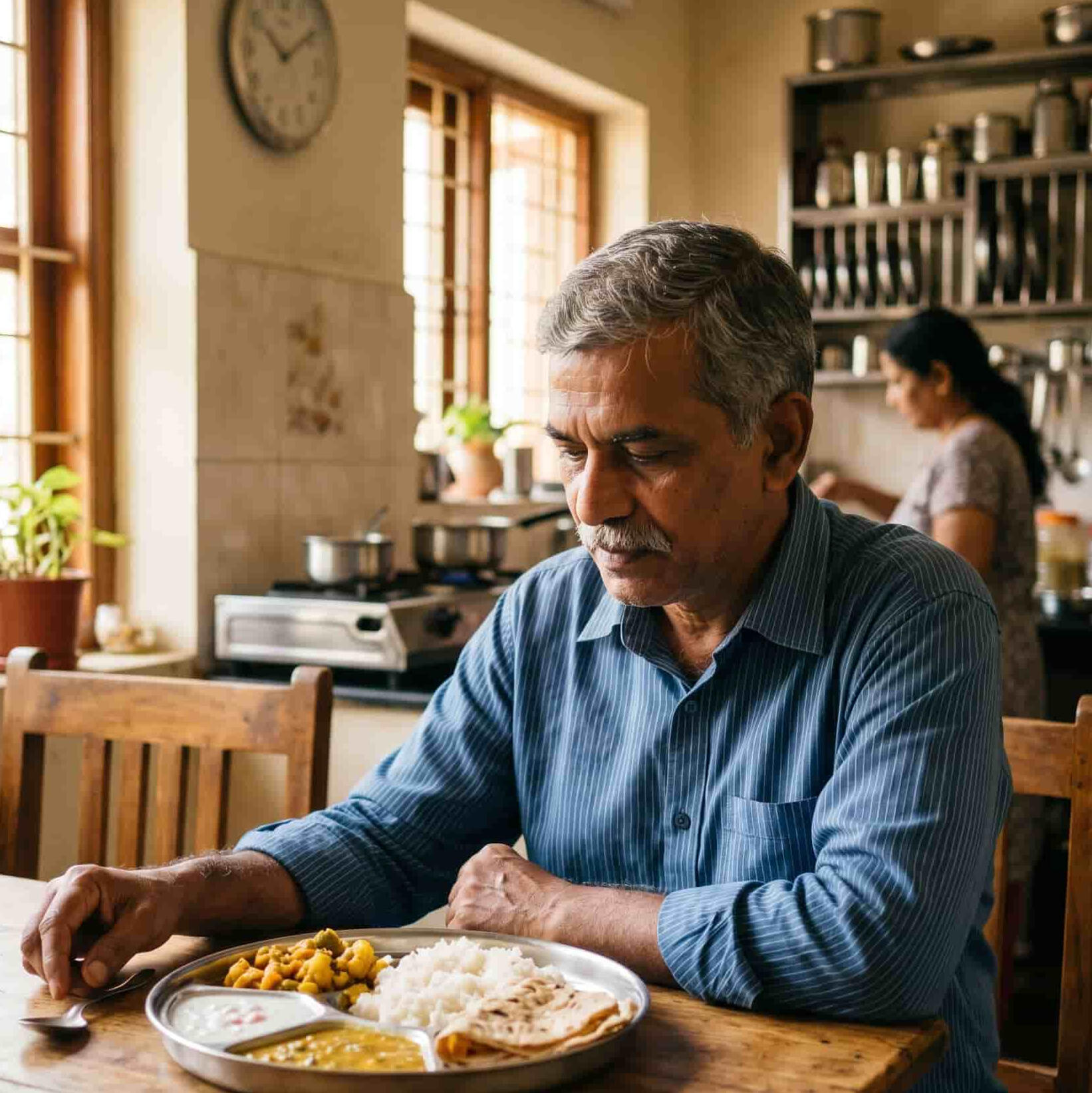
A middle-aged Indian man eating a traditional thali meal at a wooden table while a woman cooks in the background, representing family dynamics and the silent domestic environment surrounding diabetes (chronic) treatments.

Controlled vs. Well: The Medication Gap in Indian Diabetes Management

Diabetes management in India has a well-worn pattern. Diagnosis, usually after a routine checkup or a health scare. Metformin. Follow-up every few months for HbA1c. Gradual increase in medication as numbers drift. Occasional advice to reduce sweets and oil, delivered in a two-minute slot at the end of a consultation.

This is not negligence. This is what the current structure allows. A physician managing a full OPD schedule cannot also function as a clinical dietitian. The prescription is the tool they have. They use it. The patient takes the medicine. The diet — the single most powerful modifiable factor in diabetes management — is addressed through general instruction rather than clinical-grade intervention.Years pass. The numbers are controlled, more or less. But controlled is not the same as well. The fatigue persists. The weight does not shift. Sometimes the medicine dosage climbs. And the patient, doing their best, has never had anyone sit with them for ninety minutes and actually redesign how they eat.

Lifestyle Is a Clinical Intervention

For type 2 diabetes, the evidence is unambiguous: sustained dietary and lifestyle intervention can achieve results that medication alone cannot — including, in some cases, meaningful reversal of markers. This is not alternative medicine. This is mainstream clinical evidence.The reason it does not happen routinely is not lack of evidence. It is lack of structure. A clinical dietitian doing the real work of diabetes nutrition — meal mapping, glycaemic load management, progressive monitoring — requires time per patient that the standard healthcare model does not accommodate. And without coordination with the prescribing physician, the nutritional intervention and the medication management operate independently, sometimes at cross-purposes.

What Coordinated Chronic Disease Care Looks Like

JeevanKey builds chronic disease management teams where the doctor maintains clinical oversight — monitoring markers, managing prescriptions, adjusting medication as the lifestyle intervention takes effect — and a clinical dietitian leads the active recovery work that determines whether medication needs to increase, hold, or reduce over time.A yoga and movement specialist handles the daily activity dimension that both the physician and dietitian prescribe but neither has the time to coach in practice. For patients whose chronic condition has taken a psychological toll — which over eight years, it almost always has — a counsellor is part of the team.The medicine and the lifestyle intervention work together because the people prescribing them are working together.

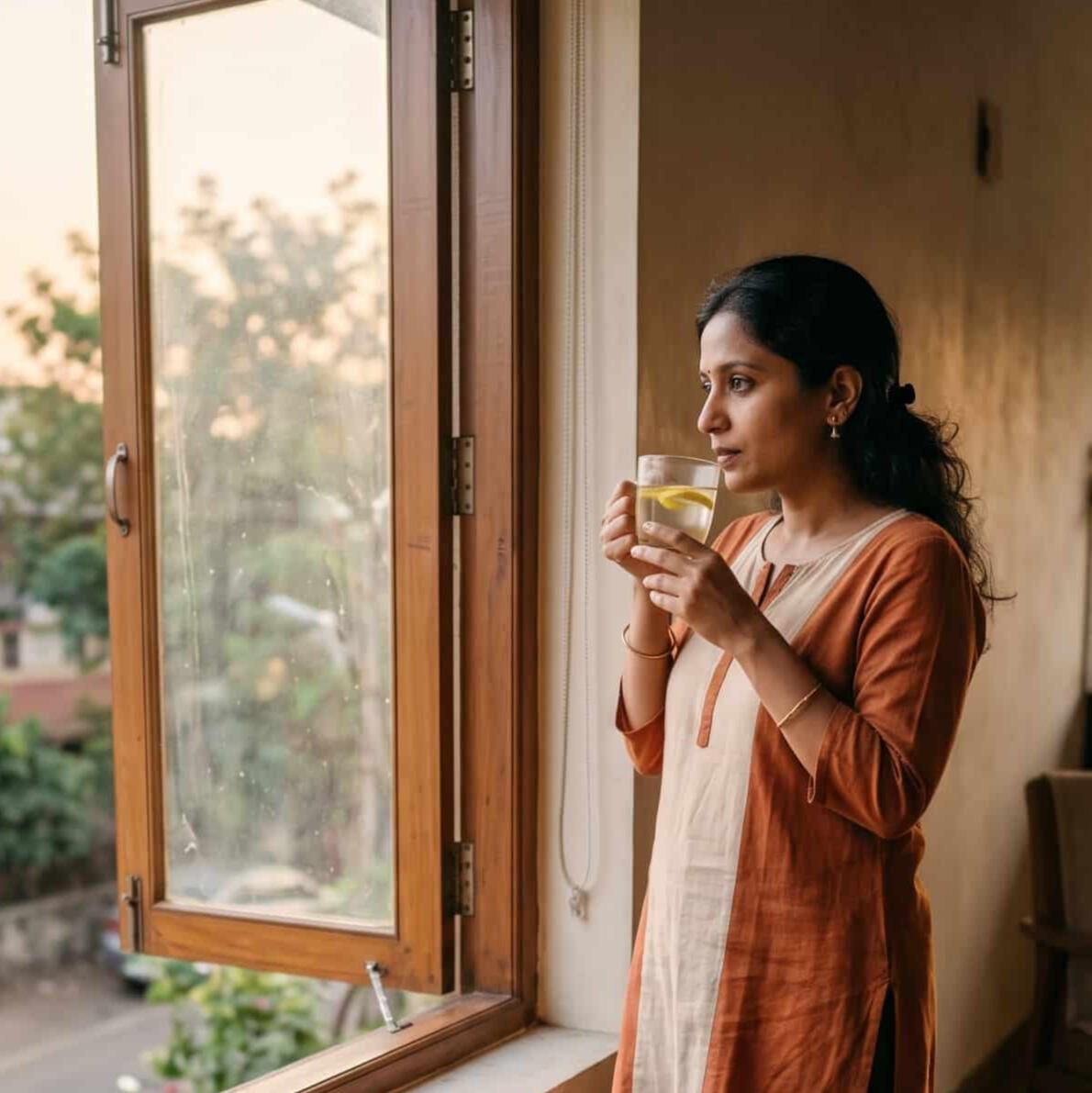
Falling Sick Every Month Is Not Bad Luck. It Is a Signal Your Body Has Been Sending for a Long Time.

A woman in a traditional Kurti standing by a large open window drinking warm lemon water, focusing on daily self-care and morning routines during a stressful medical journey.

The Endless Cycle: Why Regular Colds Are a Deeper Systemic Pattern

The cold that comes every six weeks. The chest infection that refuses to fully clear. The seasonal fever that everyone else shakes off in three days and that takes you ten. For a while, it seems like bad luck or a busy season or a particularly aggressive year for viruses.

Eventually, it becomes a pattern. And patterns have causes.Recurring illness — infections that come back too often, take too long to resolve, or leave you feeling depleted long after the acute phase has passed — is usually a sign of an immune system that is running at reduced capacity. Not a deficiency, in the clinical sense. Just functioning below the threshold it needs to be at, for reasons that are almost always addressable.

What Depletes Immunity Over Time

Sustained immune depletion in otherwise healthy adults is driven by a consistent set of factors: chronic sleep deficiency, prolonged psychological stress, nutritional gaps (particularly vitamin D, zinc, and antioxidant-rich foods), sedentary lifestyle, and — increasingly documented in urban India — the effects of sustained pollution exposure on respiratory immune function.None of these are resolved by the prescription you receive during an acute infection. The prescription treats the current infection. The underlying depletion — the reason the infections keep returning — persists.

Immunity Is Infrastructure

Rebuilding immune resilience requires the same kind of coordinated, multi-dimension approach that any infrastructure project requires. A doctor assesses the clinical picture — checking markers, ruling out anything systemic, managing the current acute phase. A clinical dietitian rebuilds the nutritional foundation: not supplement recommendations from a search result, but a detailed, sustained, personalised eating plan that systematically addresses the deficiencies driving the pattern. A wellness and movement specialist addresses sleep, stress, and the daily practices that determine whether the immune system stays where the nutrition has rebuilt it.JeevanKey builds immunity teams around exactly this structure. When all three are working together, recurring illness stops being a pattern and starts being an exception.

PCOS, Trying to Conceive, and Three Different Plans From Three Different Doctors. You Needed One Coordinated Path.

A smiling Indian woman thoughtfully writing in a personal health journal at a wooden desk by a sunny window, showcasing positive lifestyle changes and holistic reproductive wellness by JeevanKey.

The Isolated Weight: Why Uncoordinated Fertility Care Overburdens Indian Families

Fertility challenges in India carry a weight that extends far beyond the clinical. For many families, the pressure around conception is immediate, present, and multi-directional. In that environment, the medical journey often becomes a search for the most authoritative possible answer, as quickly as possible.

The gynaecologist assesses the reproductive picture. The endocrinologist manages the PCOS markers. The fertility specialist recommends a protocol. Each of these professionals is working from a position of genuine expertise and genuine concern for the patient. But their plans — constructed independently, from within their own domains — do not always align. And the woman in the middle, carrying the physical and emotional weight of trying to conceive, is left to reconcile them.

Why Fertility Recovery Is Not a Single-Specialist Problem

PCOS-related fertility challenges are fundamentally metabolic. Insulin resistance, androgen excess, anovulation — these are systemic conditions driven and modulated by diet, body composition, stress, and movement. The clinical management is essential. But clinical management without the nutritional and lifestyle foundation is working against itself.A woman with PCOS trying to conceive who is simultaneously working with a clinical dietitian on insulin-sensitising nutrition, a yoga and wellness specialist on cycle-supportive movement and stress reduction, and a gynaecologist who can see all of that context — is on a fundamentally different trajectory than one who has only the prescription and the hope that it will be enough.

What Coordinated Fertility Care Looks Like

JeevanKey builds fertility care teams that bring the clinical, nutritional, and lifestyle dimensions together from the start. A gynaecologist or doctor anchors the clinical management. A dietitian leads the nutritional work — insulin sensitivity, fertility-specific nutrition, hormonal balance through food. A yoga and breathwork specialist supports the stress and movement dimensions that fertility research consistently identifies as significant.Everyone is in the same workspace. Everyone knows what the others are doing. You have one plan, from one coordinated team.